


Article
- ホーム
- ブログ
- Uncategorized
- The Complete Guide to Niseko & Rusutsu Backcountry Skiing for Winter 2026-27: Rules, Gates, and Recommended Guided Tours
The Complete Guide to Niseko & Rusutsu Backcountry Skiing for Winter 2026-27: Rules, Gates, and Recommended Guided Tours
Niseko and Rusutsu, the hallowed grounds of the world-renowned “JAPOW,” are a dream destination for many skiers and snowboarders seeking to ride the pristine natural terrain of the backcountry. This article provides a comprehensive guide for the 2026-27 winter season, covering everything from the “Niseko Rules” for safety, knowledge of the gate system, how to select a trustworthy guided tour, and essential equipment—all while incorporating an investor’s perspective.
What Makes the Niseko & Rusutsu Backcountry So Captivating?
The primary reason Niseko and Rusutsu capture the attention of skiers worldwide is their unparalleled snow quality. Cold, dry air from Siberia picks up moisture over the Sea of Japan and collides with the Niseko mountain range, resulting in massive dumps of light, dry “aspirin-light powder.” The ultimate thrill of the backcountry is enjoying this exceptional powder on untracked slopes with no one else’s lines.
The term “backcountry” refers to areas “outside the managed ski area boundaries,” which are not groomed or patrolled like the resort’s pistes. It is pristine, untouched nature itself. The experience of gliding through serene birch forests and descending vast open bowls is an exceptional feeling you’ll never find on the groomed runs. At the same time, it is a world where risks like avalanches and getting lost are ever-present.
For this reason, the Niseko backcountry is considered suitable for intermediate to advanced riders with solid skills and experience, especially those comfortable with tree runs or those with an exploratory spirit willing to hike up for the best slopes (Source: JAPOW.TRAVEL). This unique experiential value is one of the key sources that attracts people from all over the world to the Niseko and Rusutsu area in winter, supporting its high real estate values.
The Key to Safety: The 6 Niseko Rules and Penalties You Should Know
While Niseko is known as one of the world’s premier backcountry areas, it once had the highest number of avalanche fatalities in Japan (Sources: Niseko United, Niseko Town Office). To prevent a repeat of this tragedy, local stakeholders collaborated in 2001 to establish the “Niseko Rules,” a unique set of local regulations designed to ensure safety while respecting the freedom of skiers and snowboarders.
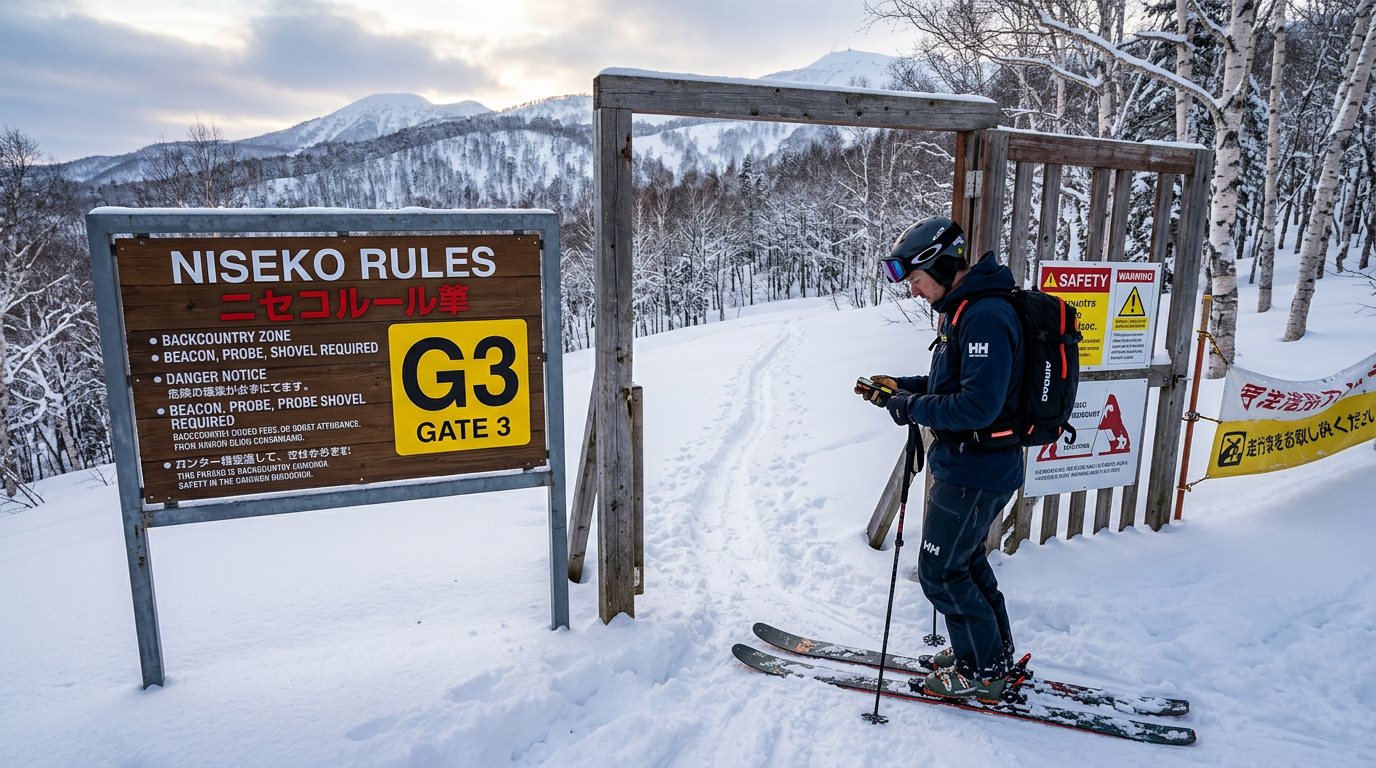
To enjoy the backcountry in Niseko, it is absolutely essential to understand and comply with these rules. The rules consist mainly of the following six articles and are clearly posted near the gates at each ski resort. They can be considered the “law of the mountain,” ensuring everyone can enjoy their time safely.
- 1. You must only exit the ski area through a designated gate.
- 2. Do not duck under ropes to ski out of bounds.
- 3. For safe riding outside the ski area, wearing a helmet and an avalanche beacon is considered the minimum requirement.
- 4. You must not go out of bounds when gates are closed.
- 5. Never enter strictly off-limits areas (such as Haru no Taki).
- 6. Elementary school children are prohibited from skiing out of bounds on their own.
(Source: Niseko Town Office)
If you violate these rules, your lift pass may be confiscated by the ski patrol. Furthermore, if you require rescue in an unmanaged area, you may be charged a minimum of 100,000 JPY (approx. $629 USD) for search and rescue costs (Source: Niseko United). These are not just penalties; they are crucial agreements to protect your life and the lives of others.
【2026-27】Accessing the Backcountry: The Niseko & Rusutsu Gate System
The Niseko Rules stipulate that you must pass through a designated “gate” when heading out of the managed ski area. These gates are opened and closed by the ski patrol and the Niseko Avalanche Institute based on daily weather and avalanche risk assessments. An open gate is a sign that experts have judged the risk to be relatively low at that time, and it is the first step toward safety.
Across Niseko United (Grand Hirafu, HANAZONO, Niseko Village, Annupuri) and the adjacent Niseko Moiwa Ski Resort, there are a total of 11 official gates (Source: NISADE). Each gate has a number and a name, leading to different terrain and slopes. For example, the famous “G3 Hirafu Peak Gate” provides access to the vast gully terrain known as the Back Bowl and the beautiful East Ridge.
Rusutsu Resort, on the other hand, uses a different system from Niseko, designating off-piste areas as “self-responsibility areas.” These are still outside the managed ski area boundaries. Rusutsu Resort offers a paid “Mountain Guiding” program for experts, where professional guides lead you through these self-responsibility areas, providing a safe option for enjoyment (Source: Rusutsu Resort).
The world-class natural capital of the Niseko-Rusutsu area extends beyond winter activities, attracting year-round tourism and significantly influencing real estate values. The attention from high-net-worth individuals from overseas is particularly high, a trend clearly reflected in recent official land prices.
In this way, unique experiential values like the backcountry enhance the entire area’s brand power and underpin the appeal of real estate investment. When considering an investment, a long-term perspective that takes these regional characteristics into account is required.
【Beginner to Advanced】How to Choose a Reliable Guided Tour and Typical Costs
The backcountry is a world where ensuring safety is extremely difficult without specialized knowledge and experience of weather, snow conditions, and terrain. Beginners, in particular, should always join a tour led by an experienced guide. A guide not only ensures your safety but also acts as a navigator, efficiently leading you to the slopes with the best conditions of the day.
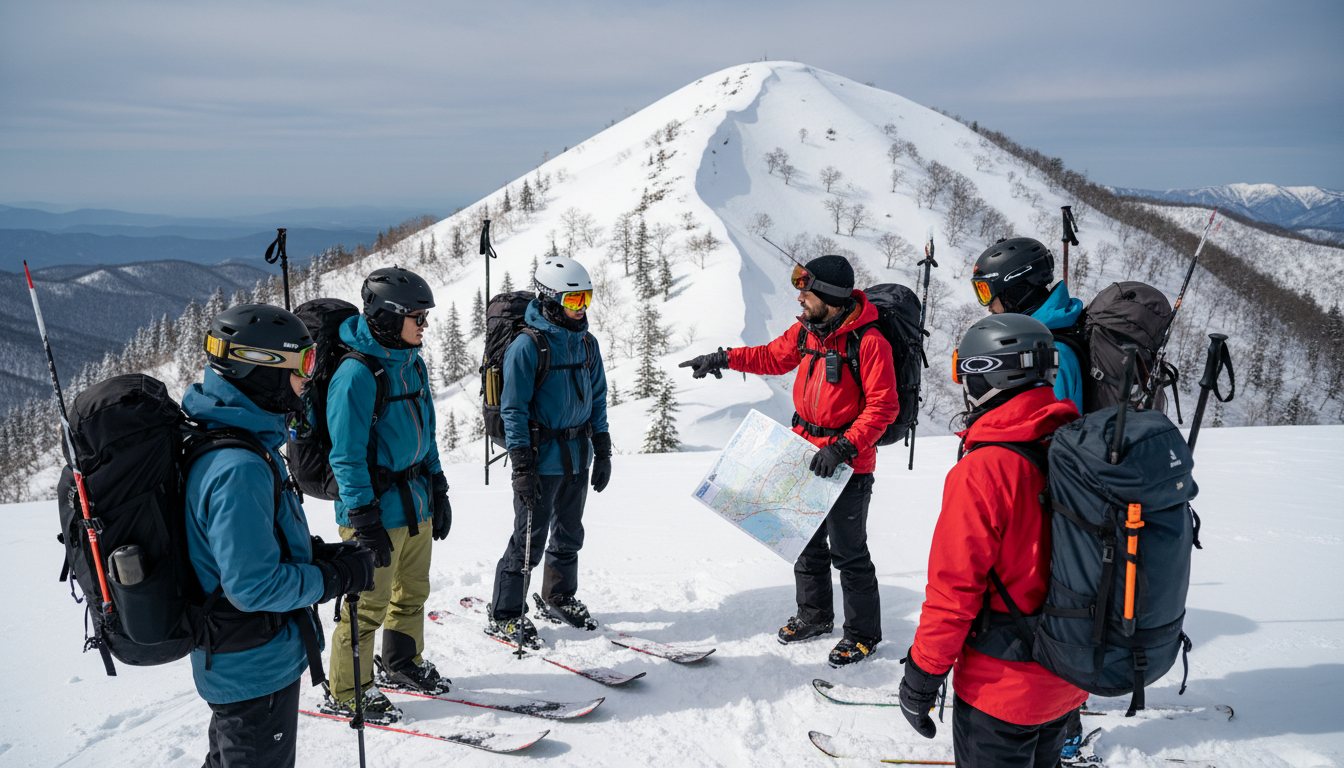
There are several key points to choosing a reliable guided tour. First, check if they have certified guides with qualifications from organizations like the Japan Mountain Guides Association (JMGA). Other important criteria are whether they offer rentals for safety equipment like avalanche beacons and whether they run small-group tours tailored to the participants’ skill levels.
The typical cost for a backcountry guided tour in the Niseko area is around 110,000 JPY (approx. $692 USD) to 140,000 JPY (approx. $881 USD) per day for a private guide, where your group has the guide to yourselves (Source: POWDER COMPANY GUIDES). The per-person cost decreases with more participants, but it is by no means cheap. However, this should be considered a necessary expense for safety and the ultimate experience.
At Rusutsu Resort, the aforementioned “Mountain Guiding” program is available, allowing you to ski untouched powder with a professional guide (Source: Rusutsu Resort). These tours are very popular and tend to get booked up quickly, especially during peak season, so we recommend planning and booking early.
To Protect Your Life: Essential Backcountry Gear and Avalanche Information
When venturing into the backcountry, safety equipment is absolutely essential. In particular, the “avalanche beacon,” “probe,” and “shovel” are known as “the holy trinity” and are considered mandatory gear for saving your own life or the lives of your companions (Source: YamaHack). They are used to locate a buried person or to signal your own position in the event of an avalanche.
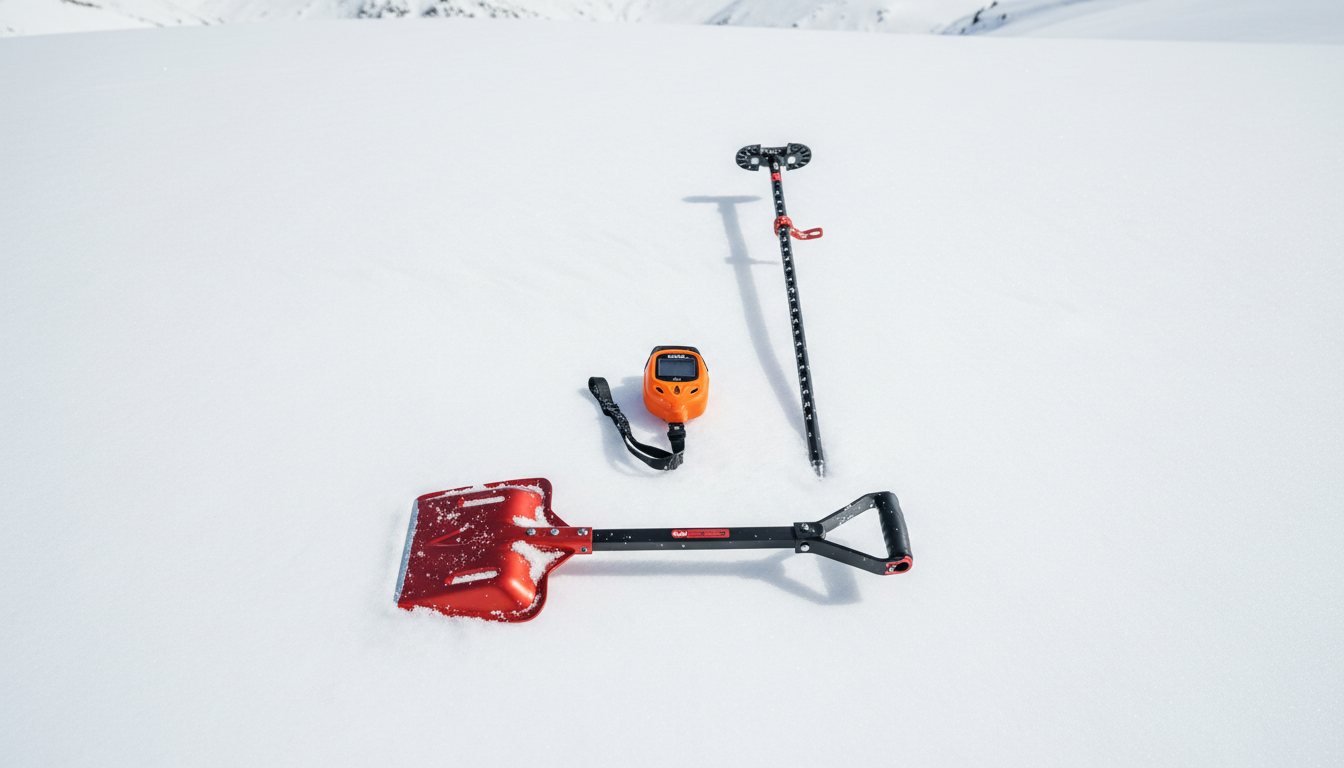
The “Holy Trinity” of Essential Backcountry Gear
| Gear | Function |
|---|---|
| Avalanche Beacon (Transceiver) | A transceiver that transmits a signal when buried and is used to search for other buried victims. |
| Probe | A collapsible pole used to pinpoint a buried victim’s exact location and depth after a beacon search. |
| Shovel | A metal shovel for digging out a buried victim. Also used for pit checks to analyze snow layers. |
Simply carrying this equipment is not enough; it’s crucial to be proficient in using it beforehand. If you join a guided tour, you will often receive instruction on how to use it. In addition to the holy trinity, you should also carry a backcountry-specific backpack, a helmet, communication devices, and a first-aid kit.
Just as important as equipment is “information.” In the Niseko area, the NPO “Niseko Avalanche Institute” publishes the daily “Niseko Avalanche Information” on its website every morning (Source: Niseko Avalanche Information). This is the official source providing the day’s avalanche risk and the status of each gate, and it must be checked before entering the backcountry. An amazing experience is built on a foundation of thorough preparation and correct knowledge.
Please make investment decisions carefully and at your own risk.
For consultations on land and villa investments in Rusutsu and Niseko, please contact GA Partners via our contact page.
Sources & references
- Niseko United
- Niseko Town Office
- NISADE
- Rusutsu Resort
- YamaHack
- POWDER COMPANY GUIDES
- Niseko Avalanche Information
- JAPOW.TRAVEL
Prices and data in this article are based on publicly available sources and do not guarantee future values. Please make investment decisions at your own discretion.
Tags: スキー, スノーボード, ニセコ, バックカントリー, ルスツ, 安全対策SHERE PROPERTY


