


Article
- ホーム
- ブログ
- Uncategorized
- Niseko & Rusutsu Accommodation Demand: How Does it Differ Between Winter and Summer? An In-depth Analysis of Occupancy and ADR for 2026-27
Niseko & Rusutsu Accommodation Demand: How Does it Differ Between Winter and Summer? An In-depth Analysis of Occupancy and ADR for 2026-27
To succeed in real estate investment in the Niseko-Rusutsu area, it is essential to accurately grasp the seasonal fluctuations in accommodation demand. How do guest numbers and rates change between the winter, which boasts world-class powder snow, and the summer, when visitors can enjoy the magnificent natural scenery? In this article, we will conduct an in-depth analysis of the differences in accommodation demand between winter and summer based on the latest data, and explore tips for achieving stable year-round revenue.
Accommodation Demand Concentrated in Winter, with Summer at Less Than a Quarter of the Volume
Accommodation demand in the Niseko-Rusutsu area tends to be extremely concentrated in the winter, when winter sports are at their peak. According to statistics from Kutchan Town, the total number of guest nights for foreign visitors reached approximately 234,000 in January 2026, whereas in the summer peak of August, it was only about 67,700 (Sources: pqd.co.jp, town.kutchan.hokkaido.jp). This indicates that summer demand is less than a quarter of winter’s, highlighting a significant seasonal disparity.
This trend is one of the most critical factors to consider for the income gain from hotel operations of accommodation facilities like villas and condominiums. While the prevailing business model generates the majority of annual revenue during the few winter months, the key to stabilizing year-round income lies in how effectively occupancy rates can be increased during the summer and autumn.
On the other hand, there have been positive signs of a lengthening winter tourism season in recent years. The number of tourist arrivals in the Niseko area for the 2025-26 winter season increased by 8.4% year-on-year, with particularly remarkable growth at the shoulders of the season in November (+42.1%) and March (+17.1%) (Source: atpress.ne.jp). This suggests that opportunities to capture accommodation demand outside the core season are expanding.
ADR Over 2.6 Times Higher: Drastically Different Profitability Between Winter and Summer
The seasonal difference in demand is also clearly reflected in the Average Daily Rate (ADR). Supported by strong demand, winter accommodation rates soar to several times those of the summer. This is a major factor that significantly impacts profitability in real estate investment and is arguably one of the most important metrics for investors to watch.
According to data from a research firm, the estimated booking ADR (Average Daily Rate) in Kutchan Town is projected to reach 45,800 JPY (approx. 288 USD) in January 2027, a 2.6-fold increase from 17,500 JPY (approx. 110 USD) in October 2026. In Niseko Town, the difference is even more pronounced, with a predicted 3.6-fold increase from 12,900 JPY to 46,200 JPY over the same period (Source: hotelbank.jp).
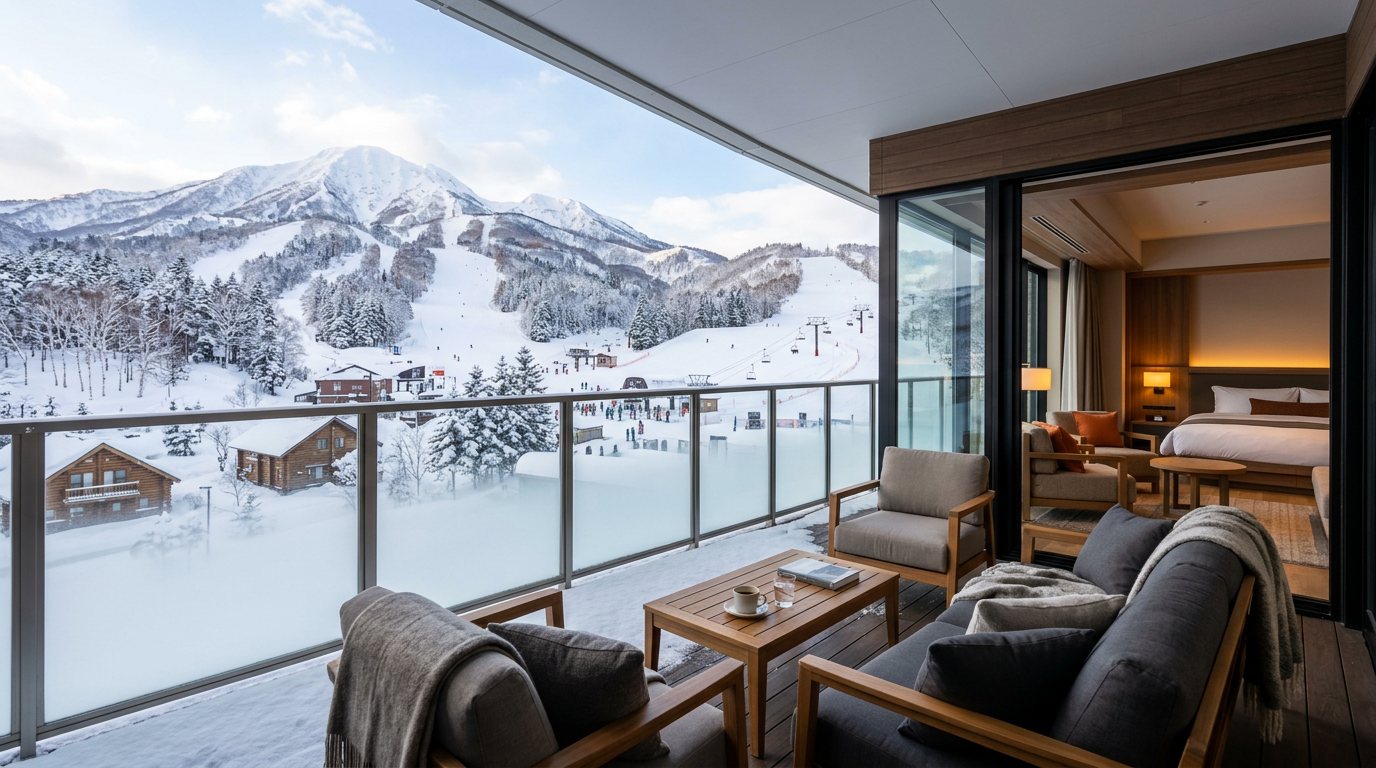
The winter peak season, especially during the Christmas to New Year’s holidays and the Lunar New Year period, is when accommodation rates are at their highest. Achieving full occupancy during this period is crucial for maximizing annual income gain. Given that summer rates are relatively modest, a strategy that does not miss out on winter revenue opportunities is essential.
Winter Driven by Inbound Tourism, with Varying Stay Patterns by Nationality
The winter season in Niseko and Rusutsu is sustained by inbound tourists from all over the world. Their spending appetite is extremely high; in the 2025-26 winter season, the average expenditure per foreign tourist was approximately 580,000 JPY (approx. 3,648 USD), about 4.6 times that of Japanese guests (Source: newscast.jp). This robust consumption is boosting the entire area’s economy and real estate values.
Another interesting point is the differing trends in visit timings to Japan by nationality. Looking at data for Hokkaido as a whole, the difference in tourist numbers from South Korea between winter (143,400 in January) and summer (127,087 in August) is relatively small, suggesting stable year-round demand. In contrast, tourists from China show a pronounced concentration of demand in winter, with the number of guests in January reaching about four times that of the summer (Source: gaikokujin-ranking.com).
Furthermore, a trend towards longer stays is also becoming prominent in the Niseko area. The total number of guest nights for foreign visitors from October 2025 to March 2026 increased by 32.9% year-on-year, a figure that far outpaces the growth in the actual number of visitors (+9.4%) (Source: newscast.jp). Long-term stays are a tailwind for villa-type accommodations and represent a key trend for securing stable revenue in the future.
Summer Demand Also on a Recovery Trend, with “Experience-Based” Activities as the Key
While summer demand may seem lackluster compared to winter, the outlook is by no means pessimistic. Following the COVID-19 pandemic, there has been a growing interest in outdoor activities both domestically and internationally, and “experience-based” activities that leverage the magnificent nature of Niseko and Rusutsu hold the key to attracting summer visitors. A variety of recreational options such as rafting, golf, cycling, and hiking enhance the appeal of the summer season.
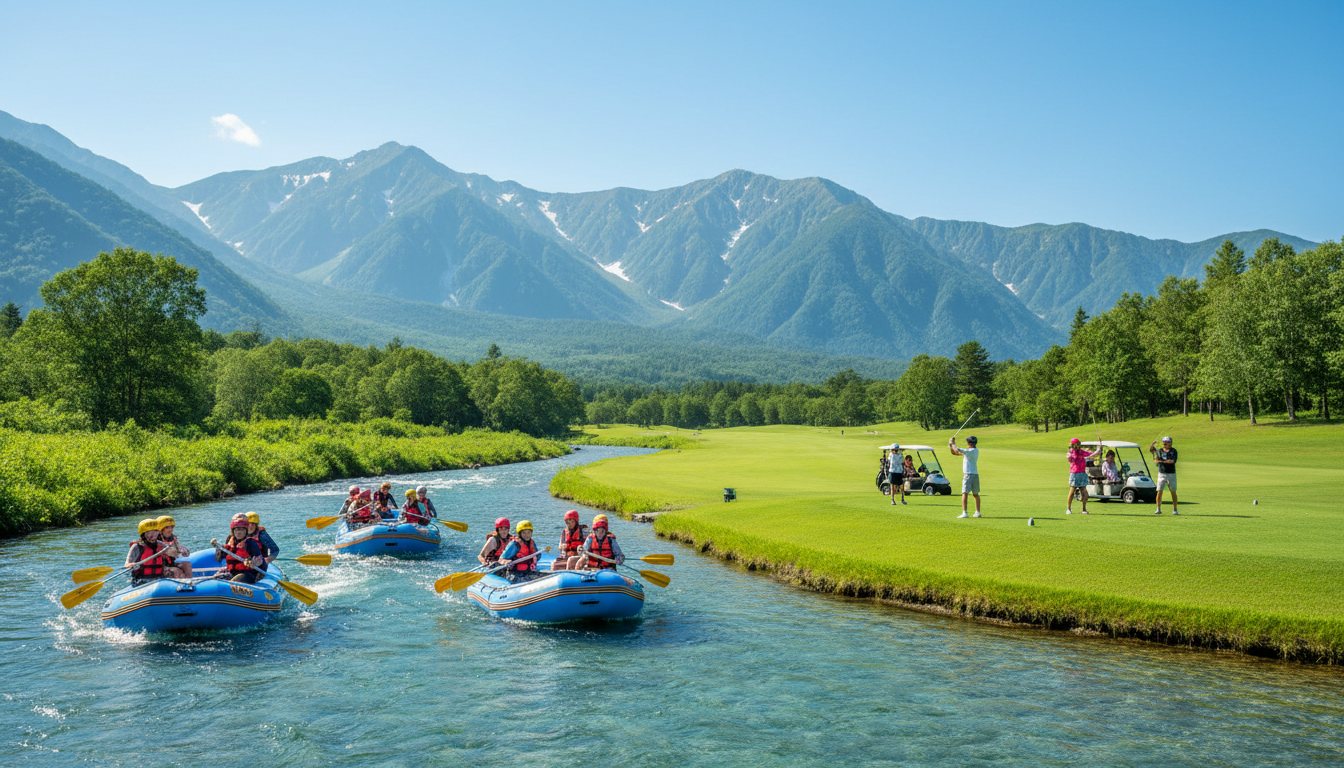
Even a slight improvement in summer occupancy rates directly contributes to boosting and stabilizing annual revenue. It is crucial for long-term maintenance and enhancement of property value not only to rely on winter profits but also to promote the unique attractions of the green season and cultivate new customer segments.
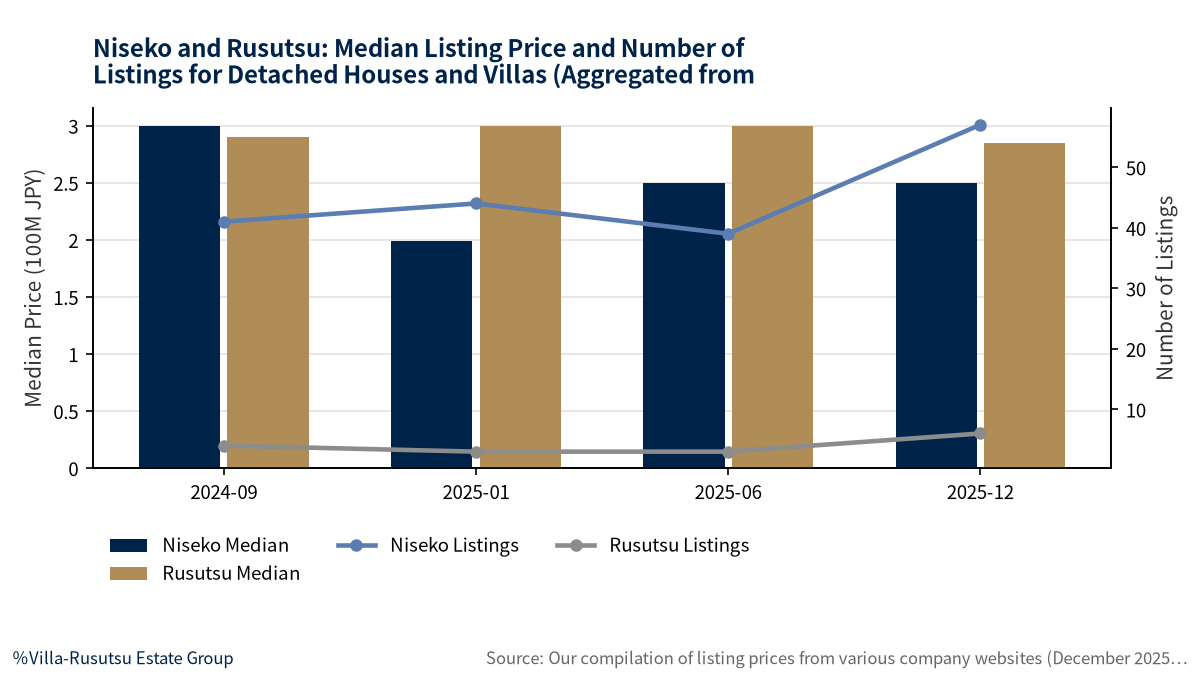
Looking at real estate market trends, investor interest remains strong. According to data compiled by our company, the median listing price for detached houses and villas in the Niseko-Rusutsu area remained at a high level throughout 2025. In Rusutsu, in particular, while the number of listings is small, the median price has been maintained at over 280 million JPY (approx. 1.76 million USD), indicating stable demand for high-quality properties (Source: Compiled by GA Partners from listing prices on various real estate websites).
In Rusutsu, luxury villas priced around 300 million JPY (approx. 1.89 million USD), such as “Tahi Chalet Rusutsu” (listed by Niseko Realty) and “Rusutsu Yotei View House” (listed by Niseko Real Estate), are on the market, forming an active marketplace. Such properties can cater not only to winter demand but also to the needs of long-term summer stays.
【Winter 2026-27】Just Before the Season! This Year’s Booking Trends and Tips to Boost Annual Revenue
For the upcoming 2026-27 winter season, many accommodation facilities have already started accepting reservations since around April 2026. As in previous years, the periods around Christmas/New Year’s, the Lunar New Year, and from January to February—when the best powder snow is expected—are particularly popular and tend to get booked up early (Source: niseko.ne.jp).
To maximize annual revenue, the first priority is to securely capture this peak season demand. In addition, strengthening efforts to attract guests during the shoulder seasons—from late November to early December and from March onwards when spring skiing can be enjoyed—will lead to improved occupancy rates.
Furthermore, for summer guest acquisition, providing value-added services such as booking activities on behalf of guests or offering BBQ set rentals can lead to differentiation, rather than simply providing a place to stay. Understanding the strengths of both the winter and summer seasons and taking a strategic approach will lead to successful real estate investment in Niseko and Rusutsu.
The data and market conditions presented in this article do not guarantee future returns. When making an actual investment, please make your own decisions at your own risk, referring to the advice of experts.
For consultations on land and villa investments in Rusutsu and Niseko, please contact GA Partners via our Contact page.
Sources & references
- pqd.co.jp, town.kutchan.hokkaido.jp
- hotelbank.jp
- newscast.jp
- atpress.ne.jp
- gaikokujin-ranking.com
- niseko.ne.jp
- Compiled by GA Partners from listing prices on various real estate websites (December 2025 edition)
- Niseko Realty
- Niseko Real Estate
Prices and data in this article are based on publicly available sources and do not guarantee future values. Please make investment decisions at your own discretion.
Tags: インカムゲイン, ニセコ, ホテル運用, ルスツ, 不動産投資, 宿泊需要SHERE PROPERTY


